

Dedicating a person to environmental practices on set is a new concept and an exciting green job. However, there are kinks to work out and not without inherent problems. Read Crystal's experience on a commercial that shot last week.
Bottom line:
1)The Eco team needs to be empowered
2) there needs to be two on a job and not pulled away and paid more than the usual PA rate
3) crews and caterers need to be part of the solution
4) reading signs should not be considered work
Crystal's story and conclusions after a 4 day commercial shoot.
The logistics of what happened:
I was the sole green PA for a commercial for [removed] commercial that shot over four days. My trash bins came from a rental truck called Kitstrucks. They only had 8 bins and I needed a minimum of 10 for two refuse stations (5 per station).
The refuse stations consisted of five sorted categories including paper, metal, plastic, compost and landfill. Paper consisted of CLEAN paper so soiled paper plates were considered landfill. Metal involved cans, food pans and aluminum foil. Plastic at first included numbers 1-7, but then were changed to 1 and 2 only due to recycling rules according to the person who was picking up the refuse. Compost at first consisted of all food materials and compostable materials such as utensils and bowls, but was later changed to non-greasy food only, no meat and no cheese.
I was also in charge of the water stations. The idea was that we would have a few plastic bottles in the beginning so that people could write their names on them and reuse them or bring their own water bottles.
The attitude of the cast and crew:
When I put out the bins the first morning a lot of people, cast and crew alike, were excited to see that the production was trying to go green. By the second and third days the majority of people who seemed excited about the concept were the new talent who hadn’t seen it before. A lot of people stood by the bins and read what contents should go where. Sometimes I was able to stand beside the stations and monitor what was being thrown in. When something was thrown in the wrong receptacle and I corrected them many people dug it back out and put it in the right one, but some just shrugged their shoulders and walked off.
Most of the other PA’s were extremely helpful. This was very fortunate because I really felt like I needed to be in multiple places at once. The other PA’s were also more than willing to let me put my bins in their truck, as long as there were no bags of garbage. This posed a problem when I had more garbage than could fit in the bins.
Problems encountered:
Although the operator of the kitstruck was extremely helpful to me and my job, sometimes other departments would take a trash bin or two and I wouldn’t know where it went, so I would have to combine the contents of bins, which meant I had to resort more later.
The first shoot day after the first company move, all the refuse was left at the first location with the intention that it was going to be picked up later. Later I was told to go with another PA in a van to pick it up and halfway there we got a call instructing us not to pick up the trash because it was the directors van and he didn’t want it to smell. So all the refuse that was sorted that morning was left on the sidewalk.
After the catered lunch on the first shoot day the caterers dumped all their leftover food in one huge black plastic bag (I used clear compostable bags for the compost) and left it leaking on the sidewalk in front of set, then left.
The second shoot day we were at a college and one of the employees of the college came around and picked up all the refuse. He told the production manager that the college did not compost, but when he came by to pick it all up, he told me they did. So the college collected all the refuse of that day and there is no certainty as to what ultimately happened to the sorted bags.
Also on the second day my bins were put into a truck and moved to the next location while I went in a van during the company move. Trucks were parked at two different locations and everyone went to lunch as soon as they moved locations. I had no idea where my bins were, so I missed lunch and didn’t have time to set up before people threw all their trash into the same bin that was already available at the college.
On the third day I was sent to get ice with another PA right before lunch. We had a hard time finding a place and then the directions we were given by another store were wrong. When we finally did find a place, there was no ice. To make a long story short it took a lot longer to find ice than it should have. By the time I got back to set lunch had already been served and many people were finished eating and looking for the refuse station. I didn’t know where my bins were because there was a company move right before lunch and other PA’s moved my bins for me. I missed lunch the day before, so grabbed what I could for later and then began setting up bins, at which point people had thrown all their garbage into one big bin that didn’t even have a liner.
On the last shoot day the caterers set up for breakfast and put out their trash bin, but when I set up my trash bins they took theirs back. Because I was 2 bins short of having two complete sets for refuse centers I had been relying on caterers trash bins for landfill, so this made it difficult to have complete centers.
Although I had two stations set up, each truck had it’s own trash bag off the back that was put out by that department. There were times when I went from truck to truck going through the individual trash bags, but I often didn’t have time for this and at the end of the day it all went into landfill.
Once wrap was called trash appeared out of nowhere, from individual department trucks and from the cleanup of the set. Even if the sorting of trash was kept up with throughout the day (which was very difficult as one person) it would have been impossible to sort through the extra trash at the end of the day unless I stayed hours after wrap.
Because most of the waste accumulated came from food, it was really hard to keep up with craft services and the catering companies, neither of which were green while trying to stay on top of the refuse station on set. The production supplied the caterers with compostable utensils and cups, but not plates or bowls. This was extremely confusing to people, because the compostable utensils looked like plastic, but went in the compost, the cups looked like paper but went in compost, the bowls from craft service looked like plastics, but because they didn’t have a number on the bottom they went into landfill, the napkins looked like paper, but because they were bleached went into landfill and the paper plates provided by catering looked like paper, but because the top one or two (out of a stack of about 7 plates) were soiled the dirty ones had to be separated into landfill, while the clean ones could go in paper.
People didn’t write their names on the plastic water bottles and very few brought their own. So instead of using tons of plastic bottles, tons of paper cups were used. I asked people to put their names on their bottles and walked around with a sharpie offering to do it for them, but only two people agreed. One PA who was on the Target job thought that part of the problem was we weren’t providing reusable water bottles, like they did for Target. But like the production manager pointed out, “If we keep providing people with water bottles on each job they’re just going to keep getting new water bottle after new water bottle.” And people will probably still forget to bring them.
Other waste I observed:
On the first day of shooting we didn’t wrap until 8 or so. At the very end of the day the production ordered about a dozen pizzas as well as a huge salad and at least half a dozen sandwiches. Some of the food was eaten, but most people chose to go home rather than stay to eat. Even after offering the neighbors free, whole pizzas, we ended up trashing at least 8 whole or partially whole pizzas, most of the salad and many of the sandwiches.
In the effort to be green the production supplied water through 5 gallon water jugs. The empty jugs were kept and sent back to the company to be refilled, which is good. But once you open one there’s not way close it again or make it spill proof. So every time there was a company move we dumped out whatever water was left, sometimes full jugs at a time. All in all I dumped out about 20 gallons of fresh drinking water. Also, when the jugs got below a certain level, the pumps no longer could pump out the water, so that was wasted as well. This could have been remedied by having a large water cooler where the excess water could be emptied.
Shooting in the middle of August was very hot and muggy. Most teamsters/drivers kept their trucks idling throughout the day in order to have the AC on. Although the engines were running the AC wasn’t very cool while in park, so some drivers revved their engines in order to make the AC colder.
Also, I didn’t know any of the locations ahead of time. This was difficult because on some of the shoots there was room to set up a complete station on set and others there wasn’t.
Suggestions for the future:
-Green PA should be introduced at the beginning of the shoot, so that everyone knows it’s a green production and what the green PA is doing.
-Depending on the size of the production, there should be at least two green PA’s.
-Green caterers.
-ALL disposable eatery should be compostable including utensils, cups, plates, bowls and napkins.
-It would be a lot easier in terms of weight and space if the trash bins were half size and there were many, say 15 or 20 bins. This way more stations could be set up around the location, but would take less space because they’re smaller.
-The EPA should be in charge of the disposal of the refuse. This is one less thing the production manager would have to do and saves confusion on the part of the Green PA because they would know exactly what to do with the waste at the end of the day.
-Maybe the green PA position shouldn’t even be a PA, but rather a separate job title. Many people argued with me about what should go where even after I told them the correct bin and why. They didn’t know what they were talking about and ended up throwing their garbage wherever they deemed necessary and so I fished it out after they left. I wonder if it was hard for them to take direction from me because I was a PA.
-the Green PAs should be able to travel with their bins so they can access them quickly.
-some sort of tag teaming with catering/craft services would be ideal, since that’s where most of the trash comes from
Extreme Optimism:
For the greening of a set to work it must come from the top down. Each department head should be involved and get their workers to be actively involved as well. If the director or department heads don’t care about being ‘green’ it’s really hard to get the rest of the cast and crew to feel the same way.
Respect for the position of the Green PA. Garbage is dirty and no one wants anything to do with it. So naturally, the green PA position is not a highly desirable job. I actually had PA’s tell me that after seeing me work that they would turn down a green PA position if they were offered it in the future.
Incentives to be a green PA/EPA:
-MONEY! This is one PA position that doesn’t give opportunity to move up. PA’s put in their time as PA’s in hopes of moving up.
-ideal sense of values and a dedication to the environment
Ideally:
-have ALL own equipment as well as own truck
-two people MINIMUM
-someone in the green business be involved in the pre-planning, so that the green PA’s know what’s going on
-hire green caterers
Final Thoughts:
Because this is a brand new position and a brand new thing to the New York film industry I think it will take some time before people get used to the idea. In the beginning any change feels like a lot of work, but once it becomes familiar I think it could catch on. I see the ‘greening’ of the film industry going one of two ways: either the concept is taken seriously and people really try to make a real change or it becomes a fad in which people/companies only want to be associated with the term, but not the lifestyle. Some of the suggestions in this report are ambitious, but nothing will change unless people’s mindsets change.

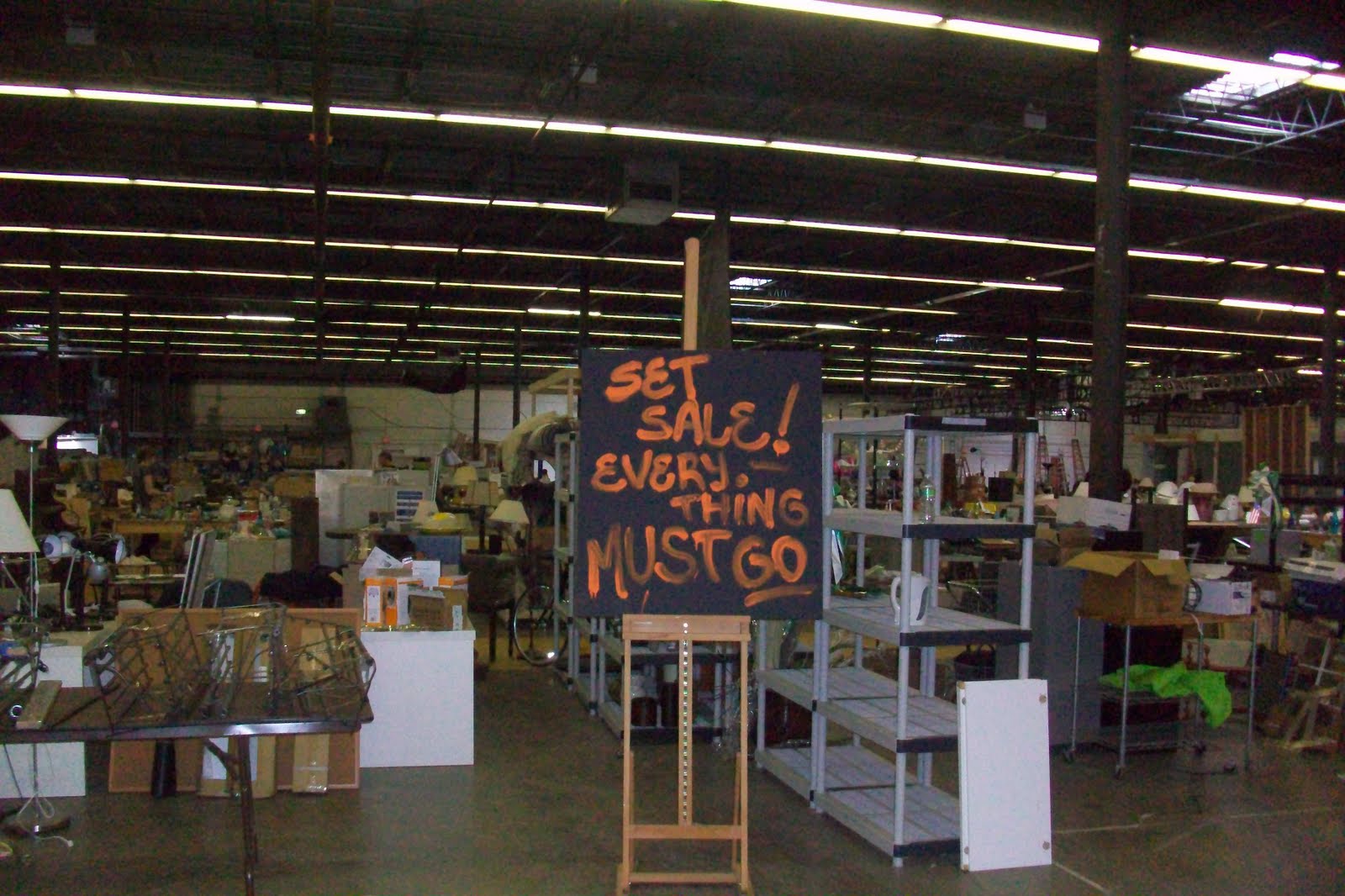 After telling most people that Film Biz Recycling's mission of diverting media production waste from landfills, the most common reply is, "Wow, I never thought about all the stuff left over. " I say, "That's okay, most people that work on a film don't think about it either." But that is changing and we see it everyday.


